.
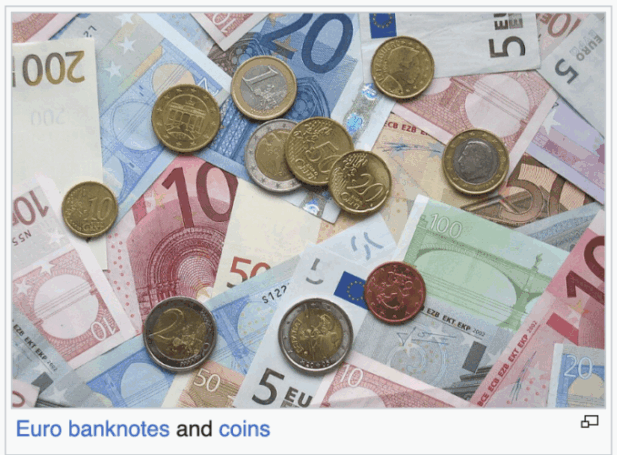
-aka “funny money“-
.
.
.
.
.
-“money” is any [‘item’ / ‘verifiable record’] that is generally accepted as ‘payment’ for [‘goods’ / ‘services’ / ‘debt re-payment’] in a particular ‘country’ or ‘socio-economic context’-
(the main functions of ‘money’ are distinguished as…)
a ‘medium of exchange’
a ‘unit of account’
a ‘store of value’
and, sometimes, a ‘standard of deferred payment’
(any ‘item’ or ‘verifiable record’ that fulfills these functions can be considered as ‘money’)
(‘money’ is historically an ’emergent market phenomenon’ establishing a ‘commodity money’, but nearly all ‘contemporary money systems’ are based on ‘fiat money’)
(‘fiat money’ (like any ‘check’ or ‘note of debt’) is without ‘use value’ as a ‘physical commodity’)
(it derives its ‘value’ by being declared by a ‘government’ to be ‘legal tender’; that is, it must be accepted as a form of payment within the boundaries of the ‘country’, for “all debts, public and private”)
(the ‘money supply’ of a ‘country’ consists of ‘currency’ (‘banknotes’ and ‘coins’) and, depending on the particular definition used, one or more types of ‘bank money’ (the ‘balances’ held in ‘checking accounts’, ‘savings accounts’, and other types of ‘bank accounts’))
(“bank money”, which consists only of ‘records’ (mostly ‘computerized’ in ‘modern banking’), forms by far the largest part of ‘broad money’ in ‘developed countries’)
(“define ‘developed’…”)
(“hmmm” says ‘arv’…”)
.
.
.
*👨🔬🕵️♀️🙇♀️*SKETCHES*🙇♂️👩🔬🕵️♂️*
.
.
.
.
.
💕💝💖💓🖤💙🖤💙🖤💙🖤❤️💚💛🧡❣️💞💔💘❣️🧡💛💚❤️🖤💜🖤💙🖤💙🖤💗💖💝💘
.
.
*🌈✨ *TABLE OF CONTENTS* ✨🌷*
.
.
🔥🔥🔥🔥🔥🔥*we won the war* 🔥🔥🔥🔥🔥🔥